LeSean Thomas Author

Author name: LeAdmin

Blog

The Hidden Cost of Always Being Right: Why Open-Mindedness Is the Key to Personal Growth

There is a quiet habit that can hold people back without them even realizing it: the need to always be right. It appears in everyday conversations, workplace disagreements, family discussions, and even the private thoughts we have about ourselves. We defend our opinions, justify our decisions, and sometimes resist information that challenges what we already believe. Having strong beliefs is not necessarily a problem. Conviction can provide direction, confidence, and purpose. The difficulty begins when protecting our opinions becomes more important than understanding the truth. The ability to reconsider what we believe is one of the most valuable qualities we can develop. Open-mindedness, intellectual humility, critical thinking, and self-awareness help us navigate uncertainty, build healthier relationships, and make more thoughtful decisions. Real personal growth does not always come from learning something new. Sometimes it comes from discovering that something we were certain about was incomplete. Why Being Right Feels So Important Think about the last time someone strongly disagreed with you. Did you immediately consider their perspective, or did you begin preparing your response before they finished speaking? For many people, the second reaction feels natural. Our beliefs are often connected to our identity. We develop opinions through education, family experiences, culture, relationships, and personal achievements. Over time, these beliefs become part of how we understand ourselves. When someone challenges them, it can feel as though they are challenging us personally. This is why disagreements sometimes become emotionally intense even when the original subject is relatively unimportant. A conversation that could have encouraged learning turns into a competition over who has the better argument. But understanding another perspective does not require abandoning your own. It simply requires recognizing that confidence and curiosity can exist together. How Cognitive Bias Influences Everyday Decisions One of the reasons people struggle to reconsider their opinions is a psychological tendency known as confirmation bias. Confirmation bias describes our tendency to notice, seek out, or give greater weight to information that supports what we already believe. Imagine someone who believes that a particular colleague is unreliable. When that colleague arrives late, the incident reinforces the existing belief. But when the same colleague completes an important project ahead of schedule, the achievement may receive less attention. The original assumption influences which details feel significant. Similar patterns appear in financial decisions, relationships, social media discussions, workplace judgments, and personal expectations. We may believe we are evaluating situations objectively while unconsciously favoring evidence that supports our existing conclusions. Recognizing cognitive bias does not eliminate it entirely. However, awareness encourages us to ask better questions. What evidence might challenge my interpretation? Am I considering the full situation? Would I reach the same conclusion if someone else were involved? These questions strengthen critical thinking, emotional intelligence, and better decision-making. Intellectual Humility Is Not a Lack of Confidence People sometimes assume that admitting uncertainty makes them appear weak or uninformed. In reality, intellectual humility can reflect considerable confidence. It means being comfortable enough with yourself to acknowledge that your knowledge has limits. A person practicing intellectual humility can say, “I have a strong opinion, but I am willing to reconsider it if better information becomes available.” This attitude creates opportunities for learning that rigid certainty can prevent. Consider a manager who insists that their approach is always correct. Employees may eventually stop offering suggestions because they expect their ideas to be dismissed. Now consider a manager who welcomes thoughtful disagreement and asks questions before making decisions. The second approach creates more opportunities to identify problems, discover alternatives, and benefit from different experiences. The same principle applies outside professional environments. Healthy relationships benefit when people are willing to acknowledge misunderstandings, consider feedback, and accept responsibility for mistakes. Intellectual humility is not about having fewer beliefs. It is about holding those beliefs with enough openness to keep learning. The Difference Between Listening and Waiting to Speak Listening is often described as a basic communication skill, yet genuine listening requires more effort than it appears. During conversations, people frequently divide their attention between hearing the speaker and preparing their next response. They may focus on identifying weaknesses in an argument, defending their position, or finding an opportunity to interrupt. As a result, they hear the words without fully considering their meaning. Active listening involves a different approach. It requires giving someone enough attention to understand their perspective before deciding whether you agree. You can practice this by asking clarifying questions, avoiding unnecessary interruptions, and summarizing what you understood. For example, instead of immediately saying, “That’s not what happened,” you might ask, “Can you explain what led you to see it that way?” This small change can reduce defensiveness and make difficult conversations more productive. It also helps develop empathy, emotional maturity, communication skills, and stronger interpersonal relationships. Why Changing Your Mind Can Be a Sign of Growth Society often rewards consistency. People are praised for standing firm, refusing to compromise, and remaining committed to their beliefs. Consistency can be valuable when it reflects integrity and thoughtful principles. But refusing to reconsider an opinion despite meaningful new evidence is not necessarily strength. Imagine continuing to follow an ineffective strategy simply because you invested years developing it. Or remaining committed to a misunderstanding because admitting the truth would feel embarrassing. In both situations, the desire to appear consistent may prevent a better outcome. Changing your mind does not automatically mean your original decision was foolish. You may have made the best judgment possible with the information available at the time. New information creates an opportunity to make a more informed decision. Personal growth becomes easier when we stop treating every changed opinion as a personal defeat. The Role of Self-Honesty in Personal Development It is relatively easy to recognize contradictions in other people’s behavior. Recognizing them in ourselves requires more effort. We may criticize someone for being impatient while overlooking our own impatience. We may expect others to listen carefully while regularly interrupting them. We may describe ourselves as open-minded while avoiding people whose perspectives differ


Blog

AI Business Opportunities: How to Turn Everyday Problems Into Profitable Digital Solutions

Artificial intelligence is transforming the way businesses operate, creating new possibilities for entrepreneurs, freelancers, and professionals who want to build sustainable income in the digital economy. However, the most promising AI business opportunities are not always found in complicated technology or expensive software. Sometimes, a successful business idea begins with a simple question: What problem can I solve better, faster, or more efficiently? From small business automation to digital product creation, artificial intelligence is helping people discover practical ways to improve existing services and develop new income opportunities. The key is understanding how to combine technology with valuable skills, customer needs, and effective business strategies. Understanding the Growing Demand for AI Business Solutions Businesses across different industries are exploring ways to reduce operational costs, improve productivity, and deliver better customer experiences. This growing interest has created opportunities for professionals who understand AI automation for small businesses, digital marketing, workflow optimization, and online business development. For example, a small business may need help organizing customer inquiries, managing appointments, improving content production, or simplifying repetitive administrative tasks. An entrepreneur who understands these challenges can potentially offer practical AI-powered business solutions without developing complicated software from scratch. The real value comes from helping businesses achieve measurable improvements rather than simply introducing new technology. How Entrepreneurs Can Identify Profitable AI Business Ideas One of the most important steps in starting an AI business is identifying problems that customers are willing to pay to solve. Instead of following every emerging trend, successful entrepreneurs often focus on specific industries and recurring customer needs. A local service provider might struggle with customer communication. An online retailer may need assistance managing product descriptions. A consultant could benefit from more efficient document preparation and client onboarding. Each situation presents a possible opportunity for AI-powered services and business process automation. However, not every problem represents a profitable market. Before investing time and resources, entrepreneurs should evaluate customer demand, competition, implementation costs, and the practical value of their proposed solution. Using AI Automation to Improve Small Business Productivity AI automation tools can help businesses streamline repetitive activities and improve operational efficiency. Tasks such as organizing information, preparing routine reports, categorizing customer inquiries, and creating initial content drafts may be suitable for AI-assisted workflows. For small business owners, reducing time spent on administrative responsibilities can create additional opportunities to focus on customer relationships, business development, and service quality. Entrepreneurs offering AI automation services should prioritize reliability, data protection, and human oversight. Effective automation is not simply about replacing manual work. It is about developing smarter processes that improve business performance while maintaining accuracy and customer trust. Creating Digital Products With Artificial Intelligence Another growing area of digital entrepreneurship involves developing useful digital products. Templates, educational resources, online courses, business guides, workflow documents, and specialized digital tools can help individuals transform professional knowledge into marketable resources. Artificial intelligence can assist with brainstorming, research organization, content planning, and production workflows. However, successful digital product creation still requires originality, quality control, and a clear understanding of the intended audience. A product becomes valuable when it addresses a specific customer need. For people exploring how to make money with AI, creating useful digital resources may offer one possible business model, although consistent sales are never guaranteed. Building Sustainable Online Income Through Specialized Services Many aspiring entrepreneurs search for ways to generate online income but overlook the importance of specialization. Offering a clearly defined service to a specific audience can make a business easier to market and manage. For example, instead of advertising general AI services, an entrepreneur might specialize in helping appointment-based businesses organize customer communication or assisting e-commerce companies with product information management. This approach can support more targeted marketing, clearer pricing, and stronger customer relationships. Developing a sustainable online business requires more than attracting occasional customers. It involves delivering reliable value, managing operating costs, and establishing processes that support consistent service quality. Why Customer Trust Matters in AI-Powered Businesses As artificial intelligence becomes more widely used, businesses must consider the importance of responsible implementation. AI-generated information can contain errors, automated communication may misunderstand customer needs, and poorly configured systems can create operational risks. For this reason, entrepreneurs developing AI consulting services should establish clear quality-control procedures. Customers need confidence that technology will improve their experience rather than introduce additional problems. Transparent communication, data privacy, professional accountability, and reliable customer support can help differentiate a trustworthy AI service provider from competitors focused only on technological features. Scaling an AI Business Without Increasing Complexity Business growth often introduces new responsibilities, including customer support, project management, employee coordination, and operational planning. Without effective processes, expansion can create unnecessary stress. A scalable AI business model should include documented workflows, clear service standards, realistic pricing, and appropriate automation. Entrepreneurs can improve efficiency by identifying repetitive activities and developing consistent procedures for completing them. However, scaling should happen only when the underlying service delivers dependable results. Long-term business growth depends on maintaining customer satisfaction while managing resources responsibly. The Future of AI Entrepreneurship and Digital Income Artificial intelligence will continue influencing how individuals develop skills, deliver services, and participate in the digital economy. New technologies may change existing business models, but the fundamentals of entrepreneurship remain important. Understanding customer needs, solving meaningful problems, managing finances, communicating effectively, and delivering consistent value will continue to influence business success. For professionals interested in AI entrepreneurship, digital income opportunities, online business growth, and the future of work, adaptability is particularly valuable. Rather than becoming dependent on a single AI platform, entrepreneurs can develop transferable skills that remain useful as technology evolves. The strongest business opportunities may come from combining technological knowledge with practical industry experience. Building Long-Term Financial Stability in the AI Economy Artificial intelligence can create opportunities to improve productivity and develop new business models, but technology alone cannot guarantee financial independence. Building financial stability requires disciplined execution, effective planning, responsible risk management, and continuous improvement. Entrepreneurs who focus on creating genuine customer value may be better positioned to establish lasting

Blog

How to Stop People-Pleasing and Build a Stronger Sense of Self

Have you ever agreed to something you didn’t want to do simply because you were afraid of disappointing someone? Maybe you accepted an extra responsibility when your schedule was already full. Perhaps you stayed silent during a disagreement to avoid conflict. Or you spent hours worrying about what someone thought of a decision that was entirely yours to make. These situations may seem ordinary, but when they become a pattern, they can gradually affect your confidence, emotional well-being, and sense of personal identity. People-pleasing behavior is often mistaken for kindness. However, there is an important difference between genuinely caring about others and constantly sacrificing your own needs to maintain their approval. Learning how to stop people-pleasing is not about becoming selfish or insensitive. It is about developing healthy boundaries, emotional independence, self-respect, and the confidence to make decisions without constantly seeking external validation. And sometimes, that shift begins with one surprisingly difficult word: no. Why Do People Feel the Need to Please Everyone? The desire to be accepted is a natural part of human behavior. Relationships, friendships, and social connections contribute to our sense of belonging. Problems can develop when acceptance becomes something we feel we must continually earn. Some people grow accustomed to avoiding disagreement because they associate conflict with rejection. Others learn to prioritize everyone else’s happiness because being helpful makes them feel appreciated or valued. Over time, these behaviors can become automatic. You may begin measuring your worth by how useful you are to others, how rarely you disappoint them, or how positively they respond to your choices. This creates a difficult emotional pattern: the more you depend on other people’s approval, the harder it becomes to recognize your own priorities. Understanding the psychology of people-pleasing is an important first step toward building stronger self-esteem and a healthier relationship with yourself. The Hidden Emotional Cost of Always Saying Yes Imagine a professional who consistently agrees to additional assignments. Their coworkers appreciate their reliability. Their manager recognizes their willingness to help. From the outside, everything appears positive. But privately, that person feels overwhelmed. Their evenings disappear into unfinished work. Personal responsibilities receive less attention. Frustration begins to build, yet they continue accepting requests because refusing feels uncomfortable. Eventually, the problem is no longer simply a demanding schedule. It is the inability to establish personal boundaries. Chronic people-pleasing can contribute to emotional exhaustion, resentment, stress, and burnout, especially when someone repeatedly ignores their own limits. The solution is not to stop helping people. It is to recognize that being dependable does not require being endlessly available. Healthy Boundaries Are a Form of Self-Respect Personal boundaries define what you are comfortable accepting in your relationships, responsibilities, and daily interactions. They help communicate how you want to be treated and what you can realistically offer. For example, setting boundaries at work might mean declining a nonessential assignment when your existing workload is already full. In friendships, it may mean explaining that you cannot always respond immediately to messages. Within family relationships, it might involve making decisions that reflect your values even when others would prefer something different. Healthy boundaries do not guarantee that everyone will agree with you. Their purpose is to help you participate in relationships without consistently abandoning your own needs. A useful principle to remember is that you can respect another person’s feelings without accepting responsibility for managing every emotion they experience. This distinction is essential for emotional maturity and long-term personal growth. Why Saying No Feels So Uncomfortable For many people, saying no creates immediate guilt. They worry about appearing rude, disappointing someone, damaging a relationship, or missing an opportunity. As a result, they say yes before considering whether they genuinely have the time, energy, or willingness to follow through. One practical way to change this behavior is to create a small pause before responding. Instead of immediately agreeing, try saying: “Let me check my schedule before I commit.” Or: “I appreciate you asking, but I won’t be able to take that on.” These responses are respectful, direct, and clear. You do not always need an elaborate explanation to justify a reasonable boundary. Learning to say no confidently becomes easier with practice. Each time you make a thoughtful decision instead of automatically seeking approval, you strengthen your ability to trust your own judgment. External Validation vs. Internal Confidence There is nothing inherently wrong with enjoying compliments, recognition, or encouragement. Positive feedback can be motivating and meaningful. However, difficulties arise when your entire sense of confidence depends on receiving it. If praise makes you feel worthy and criticism immediately makes you question your identity, your self-esteem may become heavily influenced by other people’s reactions. Internal confidence works differently. It develops when you understand your values, recognize your strengths, acknowledge your limitations, and make decisions based on thoughtful judgment. Instead of asking, “Will everyone approve of this?” you begin asking, “Does this decision align with what matters to me?” That question encourages self-awareness rather than constant comparison. Building self-confidence without external validation does not mean ignoring feedback. It means learning to evaluate feedback without allowing it to control your entire sense of self. The Connection Between People-Pleasing and Perfectionism People-pleasing and perfectionism can sometimes reinforce each other. A person who fears disappointing others may believe that being flawless is the safest way to avoid criticism. They might spend excessive time reviewing emails, overprepare for routine meetings, or feel uncomfortable admitting that they need help. Mistakes become more than ordinary learning experiences. They begin to feel like threats to acceptance. But perfection is an impossible standard. Even the most thoughtful, responsible, and capable individuals make mistakes. A healthier approach involves accepting that you can be respected without being perfect. You can be competent without knowing everything. You can be kind without agreeing with everyone. And you can be valuable without constantly demonstrating your usefulness. Reducing perfectionism often begins with allowing yourself to be human. How to Develop Emotional Independence Emotional independence does not mean becoming detached from relationships or

Blog

Why Children’s Books Are Important for Early Learning and Emotional Growth

Children’s books play an important role in shaping a child’s imagination, emotional intelligence, creativity, and learning habits. From bedtime stories to educational picture books, reading helps children understand the world around them while building communication skills and confidence from an early age. Today, many parents are searching for the best children’s books that are not only entertaining but also educational and emotionally meaningful. Books that teach kindness, friendship, empathy, confidence, honesty, and positive behavior are becoming increasingly popular among families, schools, and teachers worldwide. Whether it is a colorful picture book, an emotional bedtime story, or an educational learning adventure, children’s books help young readers grow mentally, emotionally, and socially. Why Reading Children’s Books Matters Reading regularly with children improves vocabulary, focus, imagination, and emotional understanding. Studies continue to show that children who develop reading habits early often perform better academically and communicate more confidently. Children’s books also help kids: Parents often look for educational children’s books that can teach these important lessons in a fun and engaging way. That is why meaningful storytelling has become one of the most valuable parts of modern children’s literature. The Rise of Educational and Emotional Learning Books for Kids In recent years, there has been a growing demand for social emotional learning books for children. Parents and educators now understand that emotional growth is just as important as academic learning. Books about kindness, sharing, mindfulness, confidence, courage, gratitude, and friendship help children understand emotions in healthy ways. Stories allow kids to connect with characters, understand feelings, and learn how to respond positively in real life situations. This is one reason why children’s picture books with meaningful messages continue to rank highly in online searches and educational recommendations. Popular search trends now include: How Storytelling Shapes a Child’s Mind Storytelling is one of the most powerful learning tools for children. Fun characters, adventures, and imaginative worlds help children stay engaged while learning important lessons naturally. Books that combine entertainment with emotional learning often become favorites because children enjoy revisiting those stories again and again. Colorful illustrations, animal characters, fantasy adventures, dinosaurs, friendship stories, and rhyming books are especially popular among young readers because they make learning exciting and memorable. If you are searching for a meaningful and educational children’s book that teaches kindness, empathy, confidence, and emotional growth in a fun way, explore The Big Book of Caring by LeSean Thomas. Available on Amazon and other major online platforms worldwide. Visit LeSean Thomas Official Website for more information, updates, and upcoming releases. What Makes a Great Children’s Book? The best children’s books are the ones that children enjoy while also learning valuable lessons. A strong children’s story usually includes: Books that encourage children to be kind, brave, respectful, confident, and thoughtful can have a lasting positive impact on their development. Parents today prefer books that help children balance entertainment with learning, especially during early childhood years when emotional habits and communication skills are developing rapidly. Why Parents Prefer Positive Children’s Literature Modern parenting focuses heavily on emotional support and positive development. Because of this, many families actively choose children’s books that promote: Books with these themes help children feel understood, emotionally supported, and inspired to become more caring individuals. One excellent example is The Big Book of Caring, which uses creative storytelling and lovable characters to teach positive values in an engaging way for young readers. Why Children’s Books Continue to Grow in Popularity The children’s book industry continues to grow because parents understand the long term benefits of reading. Educational books, picture books, bedtime stories, and emotional learning books remain some of the most purchased book categories worldwide. As technology continues to increase screen time, many parents are turning back toward books to encourage imagination, concentration, and meaningful family interaction. Reading together helps create stronger emotional bonds between parents and children while building healthy learning habits for the future. Looking for a heartwarming and educational children’s book your child will truly enjoy? Discover The Big Book of Caring by LeSean Thomas, a meaningful story that teaches kindness, empathy, confidence, friendship, and emotional growth for young readers. Available now on Amazon and other major online bookstores. Learn more at LeSean Thomas Official Website.

Blog

How AI Income Systems Are Changing the Future of Online Business

What Are AI Income Systems AI income systems are structured ways to make money online using artificial intelligence, automation, and digital platforms. These systems help individuals build scalable income streams through digital products, freelance services, content marketing, and online business automation. Unlike traditional jobs that depend entirely on time and effort, AI income systems focus on creating assets and workflows that continue generating income over time. This modern approach to online business is helping entrepreneurs achieve financial freedom, passive income, and long term stability. Why AI Income Systems Are Growing Rapidly The digital economy is evolving faster than ever. Businesses are using artificial intelligence to improve productivity, automate operations, and scale services. At the same time, individuals are discovering new ways to make money online with AI tools. Many people are now shifting from traditional employment toward AI powered business models because they provide flexibility, scalability, and multiple income opportunities. Artificial intelligence is no longer limited to large corporations. Today, freelancers, creators, consultants, and small business owners can use AI to compete globally. This shift is creating a new generation of digital entrepreneurs. The Biggest Problem With Traditional Income Traditional income usually depends on one thing: active work. If you stop working, the income stops. This creates financial pressure, burnout, and uncertainty. Many professionals work long hours but still struggle to build stability because they rely on a single income source. AI income systems solve this problem by helping people build automated and repeatable processes that continue working even when they are offline. This is why digital income systems are becoming one of the most important online business strategies today. How Artificial Intelligence Helps Online Businesses Artificial intelligence improves efficiency, productivity, and speed. AI tools can assist with content writing, customer support, research, data analysis, social media management, and workflow automation. For example, content creators can use AI writing tools to produce blog articles faster. Freelancers can automate repetitive administrative tasks. Business owners can improve customer communication through AI powered systems. The goal is not to replace human creativity. The goal is to strengthen productivity and create smarter systems. When used strategically, AI becomes a business growth partner. Best AI Income Ideas for Beginners One of the best things about AI income systems is that beginners can start with simple business models and gradually scale. Freelance Services Freelancers can offer AI assisted services such as: These services require low startup costs and can grow quickly with automation. Digital Products Digital products are one of the best passive income opportunities online. Examples include: Once created, digital products can generate recurring income with minimal maintenance. Content Creation Blogging, YouTube, and social media content creation are powerful ways to build authority and attract customers. AI tools help creators produce content faster while maintaining consistency. AI Automation Services Businesses are increasingly searching for automation solutions. Entrepreneurs who understand AI workflows can provide automation setup services for companies looking to improve efficiency. Why Systems Matter More Than Hustle One of the biggest lessons from successful entrepreneurs is that systems create stability. Many people work hard every day but remain financially stuck because they rely only on effort. Without structure, income becomes unpredictable. Systems help organize workflows, automate repetitive tasks, and improve consistency. They reduce stress and increase productivity. Instead of constantly starting over, successful entrepreneurs focus on building systems that scale. This is the foundation of long term online success. Building Multiple Income Streams With AI Relying on one income source is risky in today’s economy. AI income systems encourage diversification. A smart online business model may combine: When one income stream slows down, others continue generating revenue. This creates stronger financial security and business resilience. The Role of SEO and Content Marketing SEO and content marketing are essential parts of AI income systems. High quality blog content helps businesses attract traffic from Google and generate leads organically. When optimized properly, blog articles can rank for valuable search terms such as: Search engine optimization increases visibility, authority, and long term website traffic. Content marketing also builds trust. People are more likely to buy from businesses that consistently provide valuable information. Automation Creates Business Scalability Automation is one of the biggest advantages of AI powered business systems. Tasks such as: can all be automated using AI tools and digital platforms. Automation allows businesses to grow without dramatically increasing workload. It also improves customer experience and operational efficiency. However, strong systems must be built before automation is implemented. Poor processes become bigger problems when automated. Common Mistakes People Make With AI Income Systems Many beginners expect instant success. They jump between trends without building real structure. Some common mistakes include: Long term success requires patience, discipline, and consistency. AI is a powerful tool, but systems and execution are what create real results. How to Start Building an AI Income System Starting is simpler than most people think. Step 1: Choose One Skill Focus on one service, product, or business idea. Step 2: Build a Workflow Create a structured process for delivering results. Step 3: Use AI Tools Use artificial intelligence to improve speed and efficiency. Step 4: Create Content Publish SEO optimized content to attract traffic and clients. Step 5: Automate Gradually Automate repetitive tasks once your workflow becomes stable. Small consistent actions lead to major growth over time. Final Thoughts AI income systems are transforming how people build businesses and earn online. Instead of depending on unstable income sources, entrepreneurs are creating scalable systems powered by automation and artificial intelligence. The future belongs to individuals who understand systems, digital assets, SEO, automation, and online business strategy. Success is no longer about working endlessly. It is about building smarter. By combining AI tools with strong systems, content marketing, and consistent execution, anyone can create long term financial stability and scalable online income. The opportunity is growing rapidly. The best time to start building is now.

Blog

Low Expectations Book Review: The Hidden Psychology Behind Confidence, Anxiety, and Mental Strength

Introduction Modern culture constantly teaches people to aim higher, push harder, and demand more from themselves. Social media, workplace competition, and personal expectations have created an environment where confidence is often tied to achievement, recognition, and external validation. As a result, many individuals struggle with anxiety, overthinking, emotional exhaustion, and pressure-driven living. Low Expectations: Set Low Expectations and Feel Better About Yourself by LeSean Thomas presents a different perspective on personal growth and mental strength. Instead of encouraging readers to chase endless validation, the book explains how lowering ego and strengthening internal structure can create real confidence, emotional stability, and long-term psychological resilience. This makes the book highly relevant for readers searching for self improvement books, confidence building books, anxiety management techniques, emotional intelligence development, and practical mindset improvement strategies. Understanding the Core Message of Low Expectations At its core, Low Expectations is not about lowering ambition or becoming passive. The book focuses on reducing ego-driven expectations that create pressure, comparison, and emotional instability. Many people believe confidence comes from achievement, praise, or recognition. However, the book argues that confidence built only on external approval becomes fragile. When identity depends on being admired, validated, or constantly successful, even small criticism or setbacks can create anxiety and self-doubt. The central philosophy of the book is simple but powerful: Lower ego. Strengthen reinforcement. Build internal stability. This message separates the book from traditional motivational content and positions it as one of the most realistic personal growth books available for modern readers. Why High Expectations Often Create Anxiety One of the strongest psychological insights presented in Low Expectations is the connection between unrealistic expectations and anxiety. People today are under constant pressure to perform, succeed, and appear confident. Professionals feel pressure to maintain status. Entrepreneurs feel pressure to stay ahead. Students feel pressure to prove themselves. Social media amplifies comparison and creates unrealistic standards of success. The book explains that much of this anxiety is not caused by lack of ability. Instead, it comes from attaching identity to outcomes and perception. When expectations become ego-driven: This perspective makes the book highly valuable for readers searching for how to reduce anxiety naturally, how to stop overthinking, confidence and anxiety solutions, and emotional resilience strategies. Confidence Is Built Through Reinforcement, Not Motivation Unlike many self help books that rely heavily on motivational language, Low Expectations focuses on reinforcement and structure. The book repeatedly emphasizes that confidence is not something people can simply declare. Real confidence develops through preparation, discipline, consistency, and internal reinforcement. According to the book, three foundational anchors create psychological stability: Sleep Lack of sleep increases emotional reactivity, stress, and impulsive thinking. Proper rest improves mental clarity, emotional control, and confidence under pressure. Preparation When people prepare thoroughly, they reduce uncertainty and build calmness. Preparation creates what the book calls “surplus,” which allows individuals to remain steady during difficult situations. Silence Silence and reflection help individuals observe their reactions before responding emotionally. This strengthens emotional intelligence and improves decision-making. These concepts align strongly with search topics such as discipline and productivity, mental strength strategies, stress reduction methods, and daily habits for success. The Relationship Between Ego and Emotional Instability Another important theme explored throughout the book is how ego silently influences behavior, stress, and confidence. The book explains that many people spend large amounts of energy trying to protect image and perception. This creates constant vigilance and emotional fatigue. Examples include: The author argues that lowering ego does not weaken a person. Instead, it allows individuals to become calmer, more deliberate, and emotionally grounded. This idea is especially relevant for professionals, leaders, entrepreneurs, and individuals interested in emotional intelligence development and mindset transformation. Why This Book Connects With Modern Professionals Modern professionals face increasing mental pressure from competition, workload, and performance expectations. Many individuals appear successful externally while internally dealing with stress, exhaustion, and emotional instability. Low Expectations addresses these realities directly. The book explains that competence often creates additional pressure because capable individuals begin attaching their identity to performance and reliability. Over time, this creates fear of failure, fear of criticism, and emotional fatigue. By teaching readers how to separate identity from external performance, the book provides practical tools for maintaining calmness and emotional balance in demanding environments. This makes it one of the best books for confidence and anxiety for professionals, entrepreneurs, executives, and ambitious individuals. How Low Expectations Helps Build Long-Term Mental Strength The book introduces the idea that mental strength is not loud, dramatic, or motivational. Real strength comes from repetition, consistency, and emotional regulation. Instead of focusing on temporary inspiration, the book encourages readers to: These ideas create long-term psychological durability instead of short-term motivation. Readers searching for mental resilience books, emotional control techniques, personal growth strategies, and self discipline improvement will find strong value in this approach. Final Thoughts Low Expectations by LeSean Thomas is more than a traditional self improvement book. It is a thoughtful exploration of confidence, ego, emotional stability, anxiety, and mental strength in modern life. Instead of promoting unrealistic positivity or performance-driven motivation, the book teaches readers how to build calmness, structure, and internal reinforcement. Its practical psychological insights make it highly relevant for individuals looking to improve confidence, reduce anxiety, strengthen discipline, and develop a healthier mindset. For readers searching for one of the best personal growth books focused on emotional intelligence, confidence building, and long-term mental strength, Low Expectations offers a realistic and deeply valuable perspective. Where to Buy Low Expectations Low Expectations: Set Low Expectations and Feel Better About Yourself is available through the official website LeSeanThomasOfficial.com as well as on Amazon and Barnes & Noble. Readers interested in self improvement books, anxiety management resources, confidence building guides, and emotional intelligence books can easily access the title through these platforms.

Blog

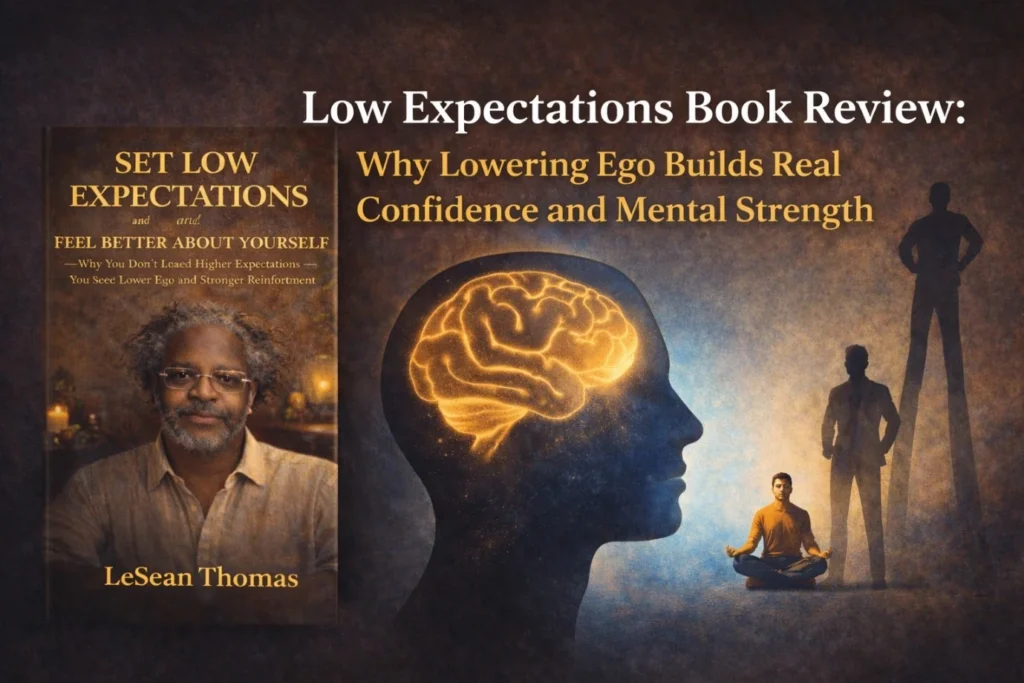
Low Expectations Book Review: Why Lowering Ego Builds Real Confidence and Mental Strength

Introduction In today’s fast-paced world of ambition, competition, and constant comparison, many people are searching for real solutions to build confidence, reduce anxiety, and improve mental strength. Low Expectations: Set Low Expectations and Feel Better About Yourself by LeSean Thomas offers a powerful and unconventional approach to personal growth. Unlike traditional self improvement books that promote high expectations and constant motivation, this book focuses on lowering ego, building internal structure, and developing real confidence that lasts. If you are looking for the best self improvement book, a confidence building book, or a mindset development book, this title stands out as a strong contender. What Makes Low Expectations Different from Other Self-Improvement Books Most self help books focus on motivation, goal setting, and positive thinking. While these methods can be helpful, they often create pressure and unrealistic expectations. Low Expectations takes a different path by addressing the root cause of anxiety and instability. It explains how high expectations linked with ego can lead to stress, overthinking, and emotional imbalance. This makes it one of the most practical personal growth books for readers who are searching for real change instead of temporary motivation. Whether you are exploring books on mental strength, emotional intelligence, or discipline and productivity, this book provides a grounded and realistic perspective. How Lowering Ego Improves Confidence and Reduces Anxiety One of the core ideas in this confidence-building book is that the ego is often the hidden reason behind anxiety and lack of confidence. When people attach their identity to outcomes, validation, and recognition, they become vulnerable to pressure and self-doubt. This leads to constant comparison, fear of failure, and emotional instability. By lowering ego and separating identity from external results, individuals can experience true confidence and mental clarity. This concept is highly relevant for those searching for how to reduce anxiety, how to stop overthinking, and how to build self-confidence naturally. It positions the book as a powerful anxiety management guide and mindset improvement resource. Building Mental Strength Through Structure and Reinforcement Unlike many personal development books that rely on motivation, Low Expectations emphasizes structure and reinforcement. The book highlights that real mental strength comes from consistent habits such as proper sleep, preparation, and controlled thinking. These foundational practices create stability and reduce uncertainty. For readers interested in productivity improvement, discipline building, and stress management techniques, this book provides actionable insights that can be applied in daily life. It aligns perfectly with search intent around mental strength strategies, daily habits for success, and long-term self development. Why This Book Is Ideal for Professionals and Entrepreneurs In a highly competitive environment, professionals and entrepreneurs often face intense pressure to perform and succeed. This pressure can lead to burnout, anxiety, and decision fatigue. Low Expectations addresses these challenges by teaching readers how to manage expectations, reduce ego-driven stress, and build internal resilience. It is one of the best books for confidence and anxiety for individuals working in demanding environments. Whether you are a business owner, freelancer, or corporate professional, this book offers practical strategies for maintaining focus, clarity, and emotional control. SEO Keywords Naturally Targeted in This Blog This blog is optimized for high-ranking keywords including low expectations book, self improvement books, confidence building book, how to reduce anxiety, mindset development book, emotional intelligence book, personal growth books, discipline and productivity, mental strength strategies, and best books for confidence and anxiety. These keywords help improve search engine visibility and attract readers who are actively looking for solutions in personal development, mental health, and confidence building. Final Thoughts Low Expectations by LeSean Thomas is more than just another self help book. It is a practical guide to reducing anxiety, improving confidence, and building long-term mental strength. By focusing on lowering ego and strengthening internal structure, the book offers a realistic and effective approach to personal growth. If you are tired of temporary motivation and looking for a sustainable way to improve your mindset, this book is a valuable addition to your reading list. Where to Buy Low Expectations You can purchase Low Expectations from the official website LeSeanThomasOfficial.com, as well as on Amazon and Barnes & Noble. These platforms make it easy for readers worldwide to access one of the best self improvement books for confidence, anxiety, and mental strength.

Best Children’s Books
Blog

Best Children’s Books for Parenting: A Complete Guide to Raising Kind, Confident, and Emotionally Strong Kids

Introduction In today’s fast-paced and digitally driven world, parents are increasingly searching for effective ways to support their child’s emotional, social, and intellectual development. One of the most powerful tools available is children’s books. High-quality children’s books are not only a source of entertainment but also a foundation for early childhood development. From building emotional intelligence to teaching essential life values, the right kids books can play a transformative role in modern parenting. The Importance of Children’s Books in Early Childhood Development Children’s books are essential for shaping a child’s early learning experience. They introduce young minds to language, emotions, and real-life situations in a simple and engaging way. Reading children’s books regularly helps improve vocabulary, comprehension, and listening skills. More importantly, it allows children to explore different perspectives, which is a key component of emotional and social development. Parenting experts widely recommend incorporating daily reading habits to support a child’s overall growth. How Children’s Books Build Emotional Intelligence Emotional intelligence is a critical skill that begins developing in early childhood. Children’s books provide a safe space for kids to understand and process emotions such as happiness, sadness, fear, and empathy. Through relatable characters and storytelling, children learn how to handle their feelings and respond to others with care and understanding. This makes children’s literature a powerful parenting tool for raising emotionally aware and balanced individuals. Teaching Moral Values Through Kids Books One of the most significant benefits of children’s books is their ability to teach moral values. Stories that focus on kindness, honesty, respect, sharing, and compassion help children develop a strong ethical foundation. These values are essential for building positive behavior and social responsibility. Parents who consistently introduce value-based children’s books often see improvements in their child’s attitude, behavior, and interactions with others. The Role of Reading in Strengthening Parent-Child Relationships Reading together is more than just an educational activity; it is a meaningful bonding experience. It provides parents and children with quality time to connect, communicate, and build trust. This interaction strengthens the parent-child relationship and creates a positive environment for learning. In modern parenting, where time is often limited, shared reading becomes an effective way to nurture both emotional connection and intellectual growth. Key Features of the Best Children’s Books Not all children’s books deliver the same impact. The best kids books are those that combine simplicity with meaningful content. They use easy-to-understand language, engaging storytelling, and relatable characters. Additionally, interactive elements such as activities or questions can enhance a child’s learning experience. Books that integrate fun with education are more likely to keep children engaged while delivering valuable life lessons. Modern Parenting and the Need for Value-Based Children’s Books Today’s parenting challenges require more than traditional teaching methods. Parents are now focusing on raising children who are not only academically strong but also emotionally intelligent and socially responsible. Value-based children’s books play a crucial role in this process by offering guidance in a subtle and engaging way. They help parents communicate important lessons without being overly strict, making learning more natural and effective. Introducing The Big Book of Caring For parents looking for a comprehensive children’s book that combines storytelling, emotional learning, and creativity, The Big Book of Caring offers a unique solution. This book is designed to support modern parenting by teaching children essential life values through engaging characters and meaningful lessons. It stands out as a powerful resource for both learning and entertainment. About The Big Book of Caring The Big Book of Caring introduces children to a world of imaginative dinosaur characters, each representing a specific value such as kindness, empathy, respect, honesty, confidence, patience, and love. Through rhyming stories and creative storytelling, the book makes complex ideas easy for children to understand. It also includes interactive elements like coloring activities, making it an engaging and educational experience for young readers. Why The Big Book of Caring is Ideal for Parents This book is carefully crafted to support both children and parents in the learning journey. It helps children develop emotional intelligence, build strong moral values, and improve social skills. For parents, it serves as a practical tool to teach important life lessons in a simple and relatable way. Its structure makes it suitable for daily reading, bedtime routines, and educational activities. How This Book Supports Child Development and Parenting Goals The Big Book of Caring aligns perfectly with modern parenting goals by focusing on holistic child development. It encourages positive behavior, emotional awareness, and confidence in children. By using storytelling as a teaching method, it allows parents to guide their children without pressure, creating a supportive and nurturing environment. Best Age Group and Usage This children’s book is ideal for kids aged 4 to 10 years. It is suitable for use at home, in schools, and in early learning environments such as daycare centers. Parents, teachers, and caregivers can all benefit from incorporating this book into their daily routines to enhance a child’s learning experience. Conclusion Children’s books remain one of the most effective tools in parenting for raising kind, confident, and emotionally strong children. They provide a foundation for lifelong learning, emotional growth, and positive behavior. Choosing the right children’s books can significantly impact a child’s development and future success. The Big Book of Caring stands out as a valuable resource for parents who want to combine learning, creativity, and character building in a single, engaging experience.

Low Expectations Book
Blog

Low Expectations Book Review: Why Lowering Ego Builds Real Confidence and Mental Strength

Introduction In a world driven by ambition, self-improvement, and constant pressure to achieve more, the book Low Expectations: Set Low Expectations and Feel Good About Yourself by LeSean Thomas challenges a deeply rooted belief. Instead of telling you to aim higher, this book introduces a powerful and unconventional idea. You do not need higher expectations to succeed. You need lower ego and stronger reinforcement. This perspective makes the book stand out in the category of self-help books, mental health improvement, and personal development strategies. If you are searching for a book about confidence, anxiety control, emotional stability, or mindset growth, this book positions itself as a must-read. What is Low Expectations About This book is not about lowering your standards or becoming less ambitious. It focuses on separating ego from expectations. Most people struggle not because they aim too low, but because their expectations are tied to validation, recognition, and comparison. The book explains that: Instead of chasing external approval, the book teaches you to build internal stability. This makes it highly relevant for readers interested in: Key Concepts That Make This Book Powerful Many self-help books tell you to believe in yourself. This book takes a different approach. Confidence is not something you claim. It is something you build through preparation and repetition. When you are well-prepared, your mind becomes calm. That calmness is real confidence. This concept is important for professionals, entrepreneurs, and students who struggle with performance anxiety. One of the strongest ideas in the book is that ego creates unnecessary pressure. When your identity depends on how others see you: Lowering ego allows you to stay steady, even under pressure. This makes the book valuable for leadership development, workplace confidence, and personal growth. The book emphasizes three core anchors: These are not motivational ideas. They are structural habits. When practiced consistently, they create mental clarity, emotional control, and long-term stability. This is why the book fits perfectly into topics like: One of the most important insights from the book is that anxiety often comes from being underprepared, not weak. When you build only to the minimum standard, your mind stays alert and tense. When you build beyond requirements, you develop surplus. Surplus creates calm. This idea connects strongly with search intent around: Why This Book is Different from Other Self Help Books Most personal development books focus on motivation, positive thinking, and goal setting. This book focuses on structure. It does not try to inspire you emotionally. It trains you to become steady. That is why it appeals to: It is practical, realistic, and deeply psychological. Who Should Read This Book This book is ideal for: If you are searching for a book that provides long-term mental strength instead of short-term motivation, this is a strong choice. SEO Keywords Integrated in This Blog This blog naturally targets high-ranking keywords such as: These keywords help improve search visibility and drive organic traffic. Final Thoughts Low Expectations is not just another self-help book. It is a structural guide to building confidence, reducing anxiety, and developing a stable mindset. It teaches you that: If your goal is to improve mental clarity, emotional control, and long-term confidence, this book delivers a powerful and practical approach. Where to Buy Low Expectations The book Low Expectations: Set Low Expectations and Feel Good About Yourself by LeSean Thomas is now available across multiple trusted platforms, making it easy for readers worldwide to access. You can purchase the book from: This wide availability ensures that readers searching for self improvement books, confidence building books, and mental strength guides can easily find and purchase the book from their preferred platform.

Blog

The Big Book of Caring – A Must-Read Children’s Book About Kindness, Values, and Emotional Learning

If you are searching for the best children’s book that teaches kindness, empathy, and positive values, The Big Book of Caring by LeSean Thomas is the perfect choice for young readers. This beautifully written and engaging kids book is designed to inspire children to become thoughtful, confident, and compassionate individuals. A Powerful Children’s Storybook Focused on Life Values The Big Book of Caring is not just a simple storybook. It is a complete learning experience for kids. Through fun dinosaur characters and creative storytelling, this children’s educational book teaches important values such as kindness, empathy, respect, honesty, gratitude, patience, and confidence. Each character represents a life lesson, making it one of the best moral storybooks for kids available online. Parents and teachers looking for children’s books about emotions, social skills, and personal development will find this book highly valuable. Best Kids’ Book for Emotional Learning and Character Building In today’s world, children need more than just entertainment. They need guidance, emotional intelligence, and positive thinking. This children’s self development book helps kids understand their feelings and teaches them how to treat others with care and respect. From kindness and sharing to bravery and forgiveness, every page of this book supports early childhood development. It is ideal for parents searching for kids books about kindness, empathy books for children, and social emotional learning books. Interactive and Engaging Children’s Book Experience This book also includes fun and interactive elements like coloring pages and imaginative storytelling, making it one of the best children’s activity books combined with learning. It keeps kids engaged while helping them absorb meaningful lessons naturally. If you are looking for children’s coloring books with educational value, kids activity books, or interactive storybooks for kids, this book is a perfect match. Available on Amazon and All Major Platforms The Big Book of Caring is available on Amazon and across multiple online platforms, making it easy for parents, educators, and gift buyers to access. Whether you are searching for children’s books online, kids books on Amazon, or best selling children’s books, this title stands out as a strong option. It is also available through its official website, helping you explore more about the book and connect directly with the author’s vision. Perfect Gift for Kids of All Ages This book makes an excellent gift for children, whether it is for birthdays, school events, or holiday presents. It is especially ideal for parents searching for: children’s books for ages 3 to 8kids bedtime storieseducational books for preschoolersmoral story books for kidsearly learning bookskids books about kindness and sharing Why This Children’s Book Stands Out The Big Book of Caring is more than just a book. It is a movement that encourages children to become “Guardians of Caring.” It empowers young readers to believe in themselves, spread kindness, and make the world a better place. If you want a children’s book that combines storytelling, education, creativity, and emotional growth, this is one of the best kids books you can choose today.

Scroll to Top